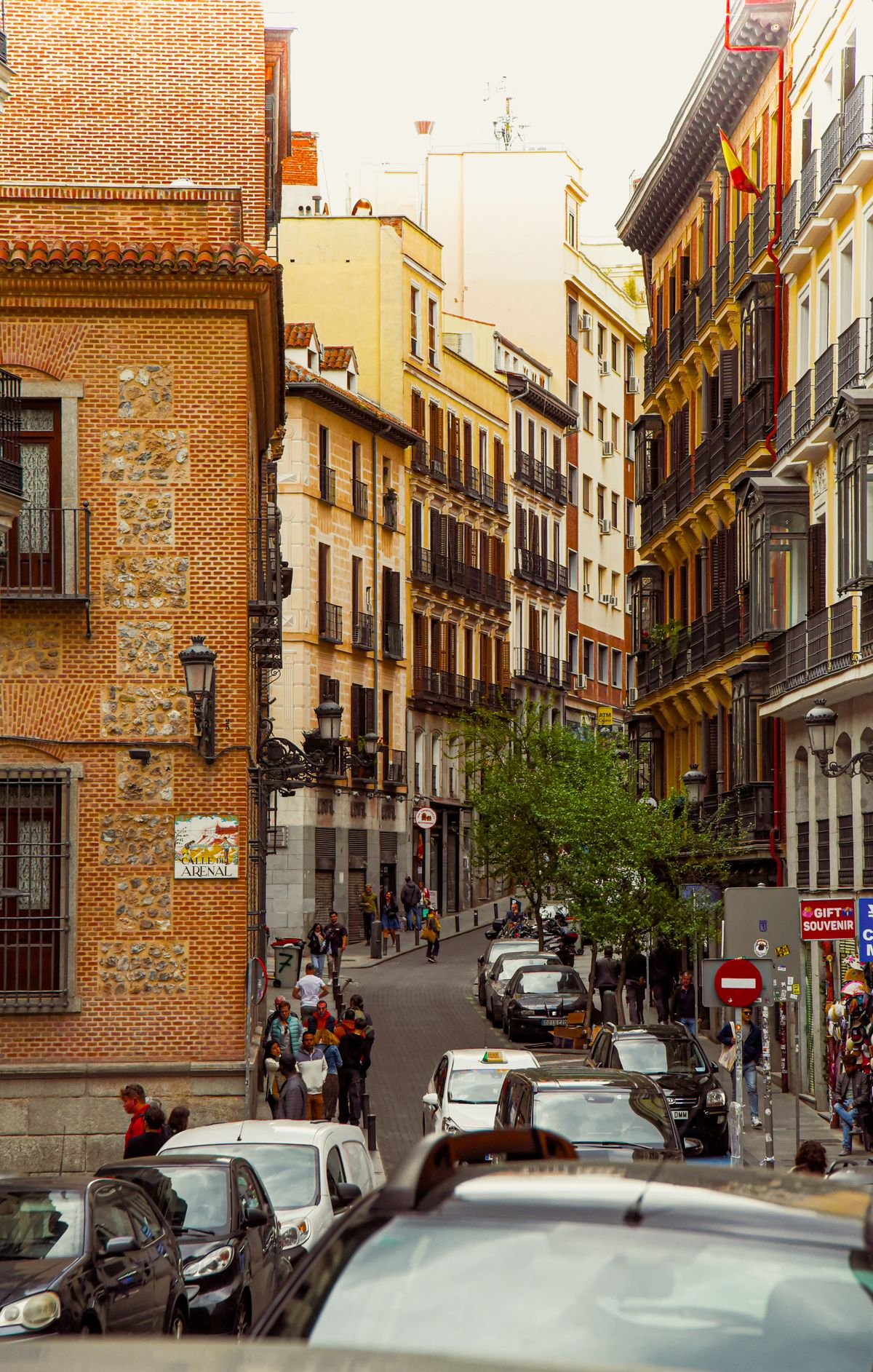
Madrid rewards travellers who look beyond the obvious. Yes, the Gran Via has its glamour, but the city's real character lives in the neighbourhood tabernas, the tiled market halls, and the baroque courtyards that most visitors walk straight past. The good news: you don't need to spend a fortune to sleep well here. Boutique hotels under €150 a night are genuinely abundant in Madrid in 2026, and several of them are exceptional. Here's how to find them, neighbourhood by neighbourhood, without wasting an afternoon on false leads.
Why Boutique Hotels Beat the Big Chains in Madrid
Chain hotels in Madrid tend to cluster around the airport, the convention centre, and the financial district along Paseo de la Castellana. They're fine for business trips, but they'll leave you eating breakfast in a room that could be in Frankfurt or Kuala Lumpur. Boutique hotels, by contrast, are usually in converted apartment buildings or 19th-century townhouses, which means higher ceilings, more character, and often a location that puts you inside a real barrio rather than adjacent to one.
Practically speaking, boutique properties in the €100 to €150 range in Madrid typically include free Wi-Fi, air conditioning (non-negotiable in July and August when temperatures regularly hit 38°C), and most have rooms with free cancellation. That last point matters: Madrid's event calendar in 2026 is packed, and flexibility is worth protecting.
One thing worth knowing before you book: cheaphotelsmadrid.com lists 5,393 hotels in Madrid starting from €38 a night, and booking through the site costs exactly the same as booking directly on Booking.com. The difference is that every stay automatically removes one tonne of CO2 through a verified carbon removal programme. If you're going to book anyway, that's a straightforward win.
The Best Neighbourhoods for Boutique Stays
Malasaña is the obvious first pick. It sits northwest of Gran Via, roughly between Calle Fuencarral and Calle San Bernardo, and it's walkable from almost everywhere central without needing the metro at all. The neighbourhood has a dense cluster of independent restaurants, vintage shops, and coffee bars that open late and close later. Boutique hotels here generally run €90 to €140 for a decent double in 2026, and the best ones are on or just off Calle del Pez and Plaza del Dos de Mayo. You're about a 12-minute walk from Sol, or two stops on L2 (red line) from Noviciado station.
Chueca, directly east of Malasaña, is slightly smarter in feel and popular year-round. Chueca metro station sits on L5 (green line) and L10, and the barrio's main square, Plaza de Chueca, has a good concentration of hotels within 200 metres. Expect to pay €110 to €150 for a boutique room with any style to it.
La Latina is worth serious consideration if you want to be close to the Rastro market on Sunday mornings and within walking distance of the Palacio Real. It's a hillier, older part of the city, served by La Latina station on L5. Hotels here are sometimes cheaper than Malasaña for equivalent quality, occasionally dipping under €100 midweek.
Lavapiés, just south of the centre, is Madrid's most multicultural neighbourhood and increasingly popular with younger travellers. Tirso de Molina station (L1, light blue line) drops you right at the edge of it. Boutique options are fewer but prices are lower, and the neighbourhood has some of the best casual eating in the city.
What to Actually Check Before You Book
Air conditioning is worth confirming individually in smaller boutique hotels, particularly in buildings that predate Spain's 1990s renovation wave. A charming 1890s facade sometimes means single-glazed windows and no central cooling. Most listings will specify this, but it's worth a quick scan of recent reviews for any stay between June and September.
Noise is the other variable. Madrid does not go to bed early. A room on a street with bars will be audible past midnight on weekends, regardless of how well-reviewed the hotel is. Ask for an interior room (habitación interior) if light sleep is important to you. These often cost the same or slightly less.
Metro access is rarely a problem if you're staying in the barrios listed above, since L1 (light blue), L2 (red), and L3 (yellow) all converge at Sol, which is kilometre zero of Spain's entire road network. From Sol you can reach any neighbourhood in this guide within three stops.
Start with Malasaña
If you're undecided on where to base yourself, Malasaña is the safest starting point. It's central without being hectic, it has genuine local life at street level, and the hotel-to-quality ratio is among the best in the city right now. Browse current availability, compare prices, and check free cancellation options at cheaphotelsmadrid.com/malasana/ and book the room that suits your dates and budget before the good ones go.
Questions, answered
Hotels in Madrid
See all stays →Curated picks are coming — meanwhile, the live search covers every bookable property at the same price or better.
%2001.jpg?width=960)

