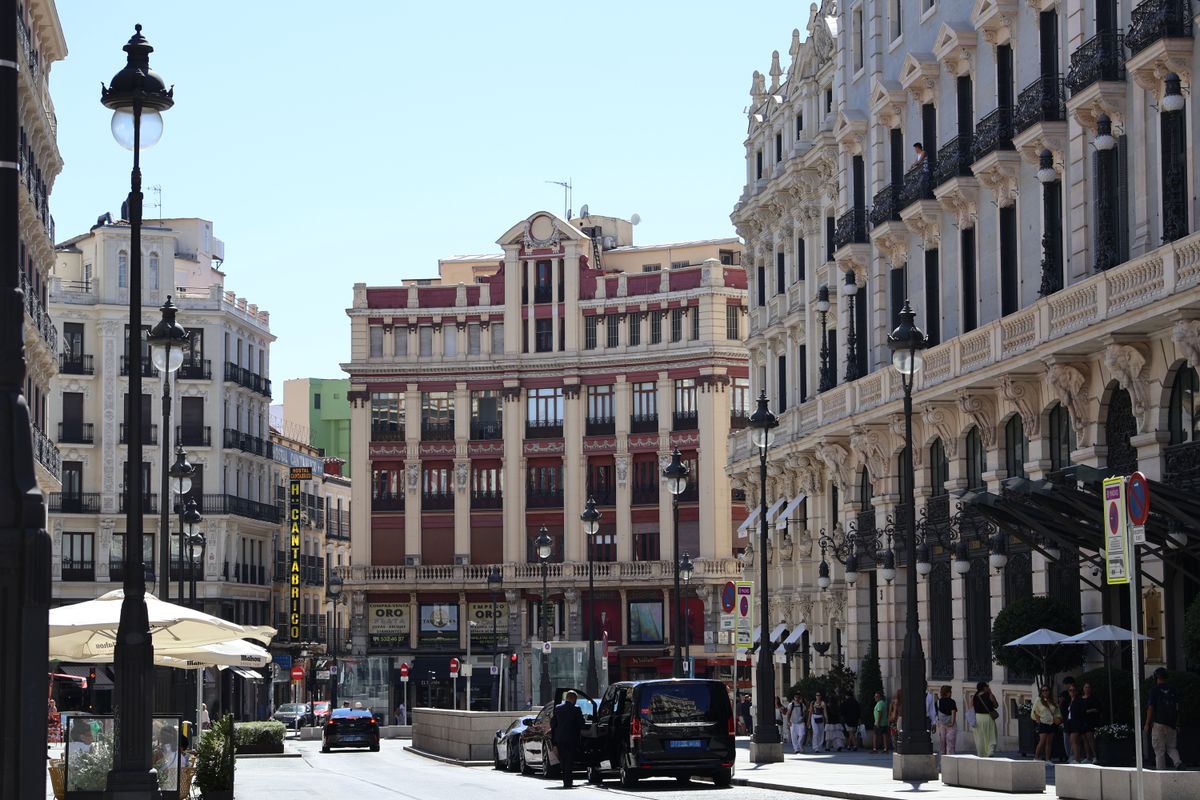
Madrid is not a city that does street food the way Bangkok or Mexico City does. You won't find vendors on every corner with steaming carts. What you will find is something more specifically Spanish: a culture of standing up at a bar with a small plate and a cold beer at 11am, of paper bags of churros passed through a hatch, of bocadillos eaten on a bench in the sun. Once you know where to look, eating well and cheaply in Madrid is genuinely easy.
Bocadillos: The Underrated Backbone of Madrid Street Food
A bocadillo is not a sandwich in the British sense. It is a crusty barra of bread, split and filled simply — jamón, tortilla, calamares, maybe a smear of tomato. No lettuce, no mayo overload. The bread is everything, and in Madrid the bread is good.
The most famous bocadillo in the city is the bocadillo de calamares, a lightly battered squid roll that costs around €3.50 to €4. The place everyone sends you to is Bar La Campana on Calle Botoneras, just off Plaza Mayor. It is a tiny bar, permanently busy, and the calamares are exactly as good as people say. Get there before 1pm or expect a queue. Plaza Mayor is a two-minute walk from Sol metro, which is served by L1, L2 and L3 — the most connected point in the entire city, and the literal kilometre zero of Spain.
For something less touristy, walk five minutes south into La Latina and look for any bar on Calle de la Cava Baja. Bocadillos here run €3 to €5. The neighbourhood has a rougher, more local feel on weekday mornings before the tapas crowds arrive on weekends.
Churros: Where to Have Them Properly
Churros in Madrid are not a dessert. They are breakfast, or a late-night snack after a long evening out, and they come with a thick hot chocolate so dense you could almost stand a spoon in it. The combination is called chocolate con churros and costs roughly €4 to €5 for a full portion.
The obvious pilgrimage is to Chocolatería San Ginés on Pasadizo de San Ginés, a narrow alley just off Calle Arenal near Sol. It has been open since 1894 and it stays open around the clock. The chocolate is dark and serious, the churros are fried to order. Yes, it is well known. It is well known because it is genuinely good. Go at an odd hour — 7am or midnight — to avoid the worst crowds.
If you want to eat churros somewhere locals actually go, head to Malasaña and find Churrería Chocolatería Valor on Calle Fuencarral, or simply walk into any café in the neighbourhood on a Sunday morning. Malasaña sits just north of Gran Vía and is about a 12-minute walk from Sol, or one stop on L2 (red line) to Tribunal.
Markets, Mercados and Eating on Your Feet
The Mercado de San Miguel, a covered iron market right next to Plaza Mayor, is beautiful and worth walking through. Be honest with yourself about the prices, though: it is aimed at tourists and a small plate can hit €6 to €8. Go to look, have one thing you really want, and move on.
For actual value, the Mercado de San Fernando in Lavapiés (Calle de Embajadores, exit at Lavapiés on L3, yellow line) is a better choice. Stalls sell everything from empanadas to pinchos morenos to fresh fruit, with most things under €3. The neighbourhood around it is one of the most genuinely multicultural in Madrid, and the food reflects that. You can eat Ethiopian, Moroccan and classic Spanish all within 200 metres of each other.
Another option is the Mercado de Vallehermoso in Chamberí, about 20 minutes north of Sol by foot or two stops on L1 (light blue line) to Iglesia. Less visited, lower prices, and a good reason to explore a neighbourhood that most short-stay visitors miss entirely. If you are planning to stay in Chamberí, cheaphotelsmadrid.com/chamberi/ lists hotels in the barrio starting from €38 per night, most with free cancellation.
Practical Notes Before You Go
Madrid eating hours are real and matter. Lunch runs from 2pm to 4pm. Dinner rarely starts before 9pm. If you turn up at a bar at 6pm expecting a full meal, you will get tapas or nothing. Lean into this: a bocadillo at noon, a long lunch at 2pm, churros somewhere after midnight. That is the correct order of operations.
Most street food and market snacks are cash-friendly, though cards are now accepted almost everywhere in central Madrid. Tipping is not expected at bars and market stalls — rounding up is fine and appreciated, nothing more is necessary.
Ready to find a base for all of this? Browse over 5,393 hotels in central Madrid, most with free cancellation, and every booking removes one tonne of CO2 from the atmosphere. Search hotels in central Madrid at cheaphotelsmadrid.com/centro/ and sort by neighbourhood to put yourself where the food is.
Questions, answered
Hotels in Madrid
See all stays →Curated picks are coming — meanwhile, the live search covers every bookable property at the same price or better.
%201.jpg?width=960)
%2001.jpg?width=960)
%2001.jpg?width=960)